

✖

A detailed checklist on how to run a more efficient workforce.

download a free copy below:


    Workforce
    logo

    How Ai Is Changing Workforce Scheduling In 2026

    Artificial intelligence is rapidly moving from an emerging technology to a practical business tool, and across the workforce management industry, organisations are exploring how it can reduce administrative workloads, improve planning and help managers make better use of their available workforce.

    In this latest article, we explore how AI is changing workforce scheduling and what it means for how organisations build and manage staff rotas…

    How is AI being used in workforce management?

    AI is here to stay, and it is already being utilised in almost every industry imaginable. In the world of workforce management, it is helping to transform tasks involving large amounts of data and repetitive decision-making.

    Recent research from SD Worx found that 65% of employers are actively exploring workplace AI, while additional studies from Gartner revealed that 45% of managers said AI improved their teams’ work as much as they expected. So how is it helping?

    Less time spent creating rotas

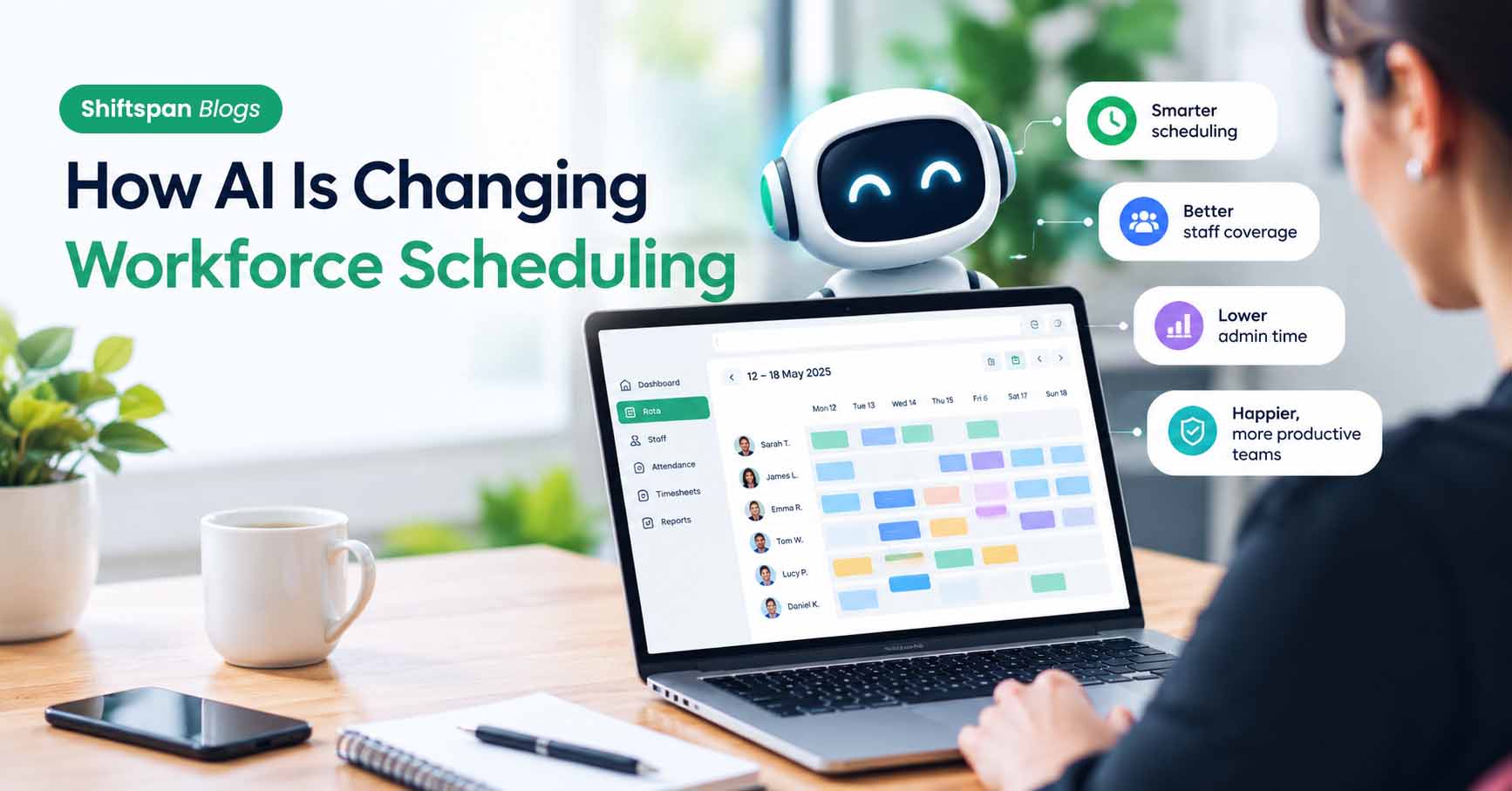
    Creating a weekly rota can be surprisingly time-consuming. Managers need to consider employee availability, contracted hours, skills, holidays, preferences and business demand, often while making changes at short notice.

    AI-powered staff scheduling software can automate much of this process; rather than starting from a blank schedule, managers can provide the relevant requirements and let the system identify suitable combinations of employees and shifts. This does not necessarily remove managers from the process, but it gives them a starting point they can review, adjust, and approve.

    Filling gaps before they become a problem

    Staff shortages are another area where AI can make a practical difference. If an employee becomes unavailable, managers traditionally need to work through availability lists, contact colleagues, and find someone to cover the shift. An intelligent work schedule app can help identify available employees based on predefined criteria, making it easier to respond quickly.

    AI can also analyse historical patterns and demand information to help organisations anticipate where additional cover may be required, meaning fewer last-minute calls and less time spent reacting to problems.

    Making employee availability easier to manage

    Managing availability across a large workforce can quickly become complicated. Employee scheduling software can bring availability, holidays, shifts, and other relevant information together in one place, and AI can then use that insight to help build schedules, reducing the manual checking managers need to do.

    For organisations currently relying on spreadsheets, emails or even a free staff rota app, this represents a significant opportunity to streamline the scheduling process.

    Workforce Scheduling

    AI still needs human oversight

    While the benefits are clear, AI’s growing role does not mean managers can hand over workforce decisions and walk away. Research into AI maturity in workforce management suggests that adoption is advancing faster, but trust, transparency, skills and data quality remain important considerations.

    The most useful approach is therefore likely to combine automation with human judgement. AI can handle repetitive scheduling tasks and identify patterns, while managers retain responsibility for decisions that require context and understanding of their teams.

    Ready to transform your workforce management technology?

    If you are looking to reduce the administrative burden of rota planning, then here at Shiftspan, we are providing workforce management technology designed to make scheduling simpler, more efficient and easier to manage.

    We can help you save over ten hours a week, so if you want to learn more about what we can offer, book a demo or try Shiftspan FREE for 2 months with no obligation.